I
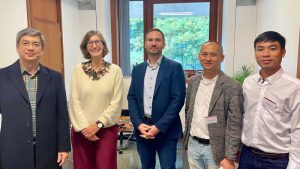
t was a real pleasure to welcome Prof. Dr. Ngo Quoc Anh, Dr. Tran Quang Hung, and Dr. Nguyen Le Anh from the Institute of Chemistry – Vietnam Academy of Science and Technology.
During their stay, we exchanged ideas, shared experiences, and explored how flow chemistry can open new perspectives for Vietnam’s chemical industry helping to develop a highly skilled workforce ready for future industrial growth. We also discussed research collaborations, student exchanges, and the future signing of an agreement to strengthen our partnership.
The visit comes at a great time for CiTOS, as we strive to increase the diversity of our teams and embrace scientific talents from every culture. Our warm thanks to the Faculty of Science at ULiege and Dean Gentiane Haesbroeck.
We would also like to acknowledge our partners from Corning, Dung Do Van, and Edwin Sia for making this connection possible.
Highlights from Flow Chemistry India 2025
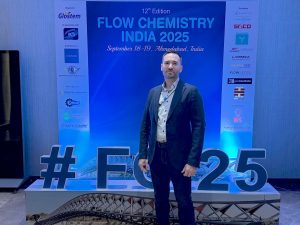
Last week, Jean-Christophe Monbaliu and Diana Silva had the pleasure of representing CiTOS at Flow Chemistry India 2025 (FCI2025) in Ahmedabad—an event that once again proved to be a vibrant hub for scientific exchange, industrial insight, and meaningful connections.
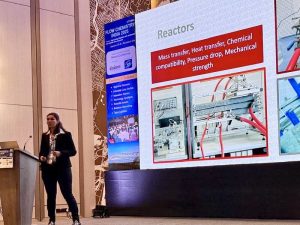
Jean-Christophe presented our integrated continuous-flow platform for the preparation of nitrofurfural pharmaceuticals, highlighting recent advances and the opportunities that integrated technologies bring to modern synthesis. Diana complemented this perspective by sharing case studies from the FloW4all resource center, demonstrating how a broad range of flow reactors can be leveraged across diverse reaction conditions. Her talk illustrated the practical value of these technologies and their growing relevance for industrial implementation.
Throughout the conference, the strong interest in continuous flow chemistry was unmistakable—from researchers exploring new methodologies to industry partners keen to translate innovation into practice. The combination of inspiring science, constructive business discussions, and warm hospitality made FCI2025 a memorable experience for both of them.
We extend our heartfelt thanks to Glostem Events, Dr. Sanjay Bajaj, Tavleen Thakur, and their entire team for the outstanding organization and genuine welcome. It was a joy to reconnect with long-standing collaborators and to form many new connections within the community.
Advancing Digital Tools at CiTOS
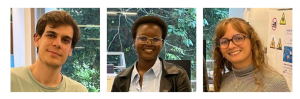
CiTOS recently wrapped up two internships that brought a noticeable boost to our digital tool development efforts thanks to the complementary work of Thomas Brun and Tiana Lorielle Kankindi, both integrated into the same project team led by our PhD researcher Mathilde Croissant.
Thomas, a Master student from ECPM Strasbourg, spent four months diving into the challenges of applying cheminformatics and AI to flow chemistry. His mission: help us bridge the gap between advanced models and everyday experimental practice. He took on this challenge by prototyping a clean, intuitive interface that allows chemists to explore AI predictions without wrestling with code or complex workflows.
In parallel, Tiana, currently in her third year of the MIASHS program at Université Toulouse-Jean Jaurès, two months tackling a very different but equally practical need in the lab: navigating legal information on regulated substances. Her work resulted in a dedicated GUI that makes it faster for chemists to find the regulatory details they need, instead of digging through scattered documents or lengthy guidelines.
Working side by side, supported by Mathilde, Thomas and Tiana helped us push forward two tools that will eventually sit within the same ecosystem: accessible, clear, and built around the real needs of chemists at the bench.
We’re grateful for the energy and thoughtfulness they brought to the group, and we want to warmly congratulate them on the quality of their work. We look forward to seeing where their paths take them next—and we hope our collaboration has fueled their interest in the interface between chemistry, data, and digital innovation.
Welcome Mariia Hruzd to CiTOS and the Poly-DREAM Project!
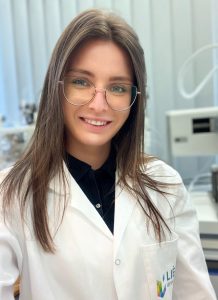
We are delighted to welcome Dr. Mariia Hruzd to CiTOS, the Center for Integrated Technology and Organic Synthesis at the University of Liège.
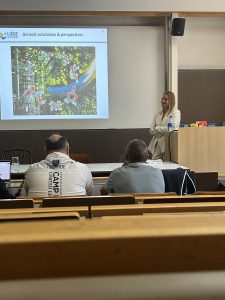
Mariia joins our team as a postdoctoral researcher to contribute to the Interreg Poly-DREAM project—Polymers & Technologies to Advance Additive Manufacturing. This ambitious cross-border initiative aims to support SMEs in the Meuse-Rhine region by developing advanced polymer materials and additive manufacturing (AM) technologies, with a strong emphasis on sustainability, circular economy, and industrial upscaling.
Mariia brings expertise in organic and organometallic synthesis, catalysis, and depolymerization, with research experience spanning Ukraine and France. With master degrees in both Analytical and Organic Chemistry and experiences at the University of Angers, University of Rennes 1, and University of Strasbourg, Mariia is an excellent addition to the team. At CiTOS, she will focus on the flow synthesis and scale-up of monomers and polymer precursors, reinforcing our contribution to sustainable polymer production within Poly-DREAM.
Welcome aboard, Mariia: we are excited to have you with us!
PhD Defense of Claire!
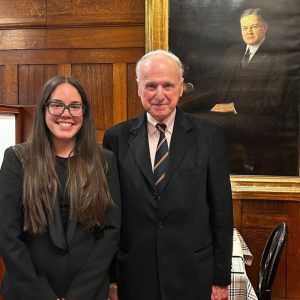
Claire successfully defended her PhD thesis, New Perspectives Toward the Valorization of Bio-Based Molecules, last Monday! During her five years at CiTOS, she explored the complex chemistry of vicinal diols—key bio-based building blocks—through a multifaceted strategy that combined traditional physical-chemistry methods with modern tools such as machine learning and DFT.
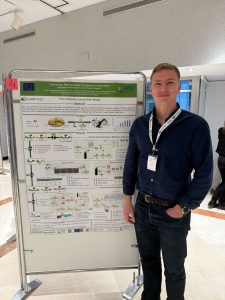
Her energy, determination, and creativity will be greatly missed, and we all wish her the very best in her future career.
Farewell to Florian Barbaz – Off to New Flow Chemistry Adventures
We bid farewell to Florian Barbaz, a PhD student in the D-Carbonize MSCA network, who has been an integral part of our team at the Center for Integrated Technology and Organic Synthesis.
During his time here, Florian focused on the valorization of biobased glycerol, a waste stream from biodiesel production. Using continuous flow chemistry, he developed scalable methods for key transformations such as hydrochlorination, dechlorination, aminolysis, and oxazolidinone synthesis. His work contributes to more sustainable chemical manufacturing – and exciting publications are on the way.
Florian now continues his PhD with a three-month secondment with our partners at Corning (Avon, France), followed by a stay at the University of Groningen in the group of Prof. Paolo Pescarmona.
We thank him for his excellent work and collaborative spirit, and wish him all the best in the next steps of his journey!
Advancing Flow Chemistry with Computational Intelligence: ISPROCHEM 2025 Highlights
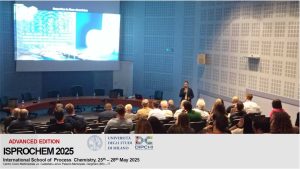
We are pleased to share that Prof. Jean-Christophe Monbaliu had the honour of delivering the opening lecture at the 2025 International School of Process Chemistry – Advanced Edition (ISPROCHEM), held in the picturesque town of Gargnano, Italy. The event brought together a dynamic group of scientists and professionals from both academia and industry to explore advancements in process chemistry.
Prof. Monbaliu’s keynote lecture, titled “Addressing the Feasibility of Reactions Under Flow with Computational Intelligence,” outlined an innovative hybrid approach combining flow chemistry with a priori computational methods. His presentation highlighted how quantum mechanical simulations and machine learning models can help predict reaction feasibility, enabling faster and more rational development of continuous processes.

JC Delivers Flow Chemistry Course at the Università degli Studi di Salerno
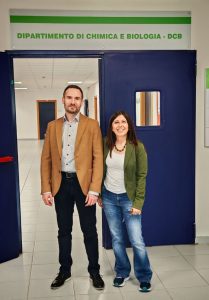
As part of an ErasmusPlus academic stay, Professor Jean-Christophe Monbaliu recently visited the Università degli Studi di Salerno, where he delivered an introductory course on flow chemistry. The course, designed to provide a comprehensive foundation in continuous flow technology for organic synthesis, was refined thanks to the contributions of Elyse Macors and Diana V. Silva-Brenes.
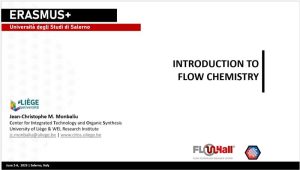
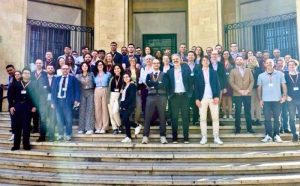
This academic exchange went far beyond teaching. The visit also included a research seminar, providing an excellent opportunity to present ongoing work from the Center for Integrated Technology and Organic Synthesis (CiTOS, University of Liège) and to exchange ideas with colleagues and students at the Department of Chemistry and Biology “Adolfo Zambelli”.
The warm welcome, lively discussions, and strong scientific engagement made this ErasmusPlus experience particularly rewarding. Special thanks go to Professor Irene Izzo and all colleagues at the Dipartimento di Chimica e Biologia for their hospitality and the intellectually stimulating environment they fostered.
From Fragile to Feasible – Jean-Christophe Monbaliu’s Plenary Lecture at the Italian Flow Chemistry Symposium
We are proud to share that our very own Jean-Christophe Monbaliu had the honor of delivering a plenary lecture at the third edition of the Italian Flow Chemistry Symposium, held on May 8–9, 2025, in the beautiful coastal city of Bari. The conference brought together leading minds in flow chemistry, and the scenic backdrop of Puglia provided the perfect setting for two days of cutting-edge scientific exchange.
Jean-Christophe’s talk, titled “From Fragile to Feasible: Flow and In Silico Tools to Tame Reactive Nitrogen Species”, highlighted innovative strategies to transform inherently unstable and reactive compounds into practical, scalable synthetic tools—through the synergy of continuous flow chemistry and computational intelligence.
Through a series of carefully selected case studies, Jean-Christophe demonstrated how flow chemistry—thanks to its superior control over mixing, heat, and mass transfer—can safely harness the reactivity of such species, including nitrosoarenes, lithium enolates, and reactive nitrogen oxides like N2O3 and acetyl nitrate. A key theme of the lecture was the increasing role of computational tools in process development. From density functional theory (DFT) to machine learning-guided models, Jean-Christophe illustrated how in silico strategies can guide reagent selection, predict kinetic behavior, and identify optimal conditions—often before any experiments are run. This “a priori intelligence” greatly accelerates feasibility assessment and reduces costly trial-and-error in the lab.
His talk aimed to emphasize a holistic vision where fundamental science and applied technologies come together. Whether it’s for safer processes, greener chemistry, or accelerated drug development, the combination of flow technology and digital tools is not just enabling new reactions—it’s transforming how we think about feasibility and scalability in modern synthesis.
Connecting Innovation and Partnership – CITOS at the Corning Flow Chemistry Workshop, April 2025
Last week, Elyse, Florian, and Diana had the pleasure of representing the CITOS team at the April 2025 edition of the Corning Flow Chemistry Workshop, held in Avon, France. This immersive, hands-on event provided a unique opportunity to deepen our knowledge of Corning’s advanced flow technology platforms and to reconnect with long-standing partners and collaborators.
The workshop included detailed technical sessions on Corning’s reactor systems, live demonstrations, and insightful discussions around applications of flow chemistry in both research and industrial settings. Our team also had the chance to tour Corning’s facilities and interact directly with scientists and engineers who, like us, are passionate about pushing the boundaries of chemical manufacturing.
It was also a great moment to reconnect with the Corning team, whose continued support and expertise remain invaluable to our efforts at CITOS and FloW4all. Collaborations like these are key to translating innovative technologies into practical, scalable solutions.
We thank Corning for the warm welcome and look forward to future joint initiatives!